

What To Expect
The Teaching About the 2026 Elections Conference is an exciting opportunity for K-12 teachers and administrators to:
- Learn about important election-related issues
- Access resources that support instruction and enhance student learning
- Be introduced to national civic education programs and their curricula
Politics can be divisive, confusing, and challenging to approach. This conference will help educators find ways to ensure their students can discuss these sensitive and important topics with care, knowledge, and facts.
Registration includes breakfast, lunch, refreshments, and a conference t-shirt!
Program Details
When: September 26, 2026, 8:30 a.m. – 4:00 p.m. CT
Where: Discovery Building | 330 N Orchard St, Madison, WI 53715
Registration Fee:
$25 | Professionals
$10 | Non UW-Madison students
Free | UW-Madison students (pre-registration required)
*This conference is funded by the Gibb Democracy Education Fund. Mary Hopkins Gibb is a 1955 School of Education alumna. Her husband, Bill, was a 1953 Wisconsin School of Business alumnus.
*PLACE is committed to creating inclusive and accessible events. If you need accommodations, please make sure to include this information when you register for this event. If accommodation needs arise after registration, please contact us at place@education.wisc.edu at least two weeks before the event. While we will do our best to fulfill late requests, we may not always be able to guarantee them.
Keynote Session
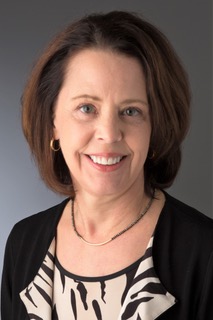
Dr. Diana Hess | Emerita Dean | UW-Madison School of Education
Title: What Does It Mean To Teach For Democracy Now?
Concurrent Sessions
This is an accordion element with a series of buttons that open and close related content panels.
Keith C. Barton | Indiana University | Professor
Keith C. Barton is Professor of Curriculum and Instruction, and Adjunct Professor of History, at Indiana University. A former elementary teacher, for over three decades he has taught preservice elementary social studies methods courses. He has published numerous studies of children’s understanding of history, and he is co-author with Linda Levstik of Doing History: Investigating with Children in Elementary and Middle Schools and with Li-Ching Ho of Curriculum for Justice and Harmony: Deliberation, Knowledge, and Action in Social and Civic Education.
Title: Why do People Care about Voting? Helping Elementary Students Understand the Significance of Elections
Description: Students need to start learning about elections from an early age, but we often find ourselves not knowing what to focus on, especially in these polarized times. Sometimes, we simply focus on technical procedures of voting or superficial aspects of the presidency, and we may portray elections as little more than personality contests. This session will provide suggestions for helping elementary students understand not just what elections are, but why they matter: What elected official do (something that few elementary students understand), and how people make decisions about who to vote for.
Leah M. Bueso | Assistant Professor | University of Illinois Springfield
Leah M. Bueso is an Assistant Professor of Urban Education at the University of Illinois Springfield. Her research examines issues of racial and socioeconomic inequality in K-12 schools with a specific focus on civic education, special education, and education law. Leah received her Ph.D. from the University of California, Los Angeles and her J.D. from the University of Michigan Law School. She is also a credentialed special education teacher and reading specialist for children diagnosed with a language-based learning disability.
Title: Educating for Equitable Voting: Teaching Opportunities and Challenges
Description: This session will explore what it means to educate for equitable voting in today’s political climate. In particular, we will discuss K-12 public educators’ role in safeguarding democracy and how they can help students interrogate democratic ideals and systems related to voting. Participants will also get the chance to engage in sample lessons focused on Wisconsin.
David T. Canon | UW-Madison | Emeritus Professor
David T. Canon is a professor emeritus in the political science department at the University of Wisconsin, Madison. He retired in 2023 to spend more time with his family (and especially, his new granddaughters). He served as chair of the department from 2014-2017 and in Fall, 2020. He received his Ph.D. from the University of Minnesota and previously taught at Duke University. He also served as the Distinguished Fulbright Chair in Tübingen, Germany in 2011-2012 and Debrecen, Hungary in 2003-2004. His teaching and research interests are in American political institutions, especially Congress. His more specific research interests include election administration, racial representation, redistricting, political careers, and the historical study of Congress. He is author of Race, Redistricting, and Representation (University of Chicago Press, 1999, winner of the Richard F. Fenno award for the best book on legislative politics), The Dysfunctional Congress? The Individual Roots of an Institutional Dilemma (with Ken Mayer; Westview Press, 1999), Actors, Athletes, and Astronauts: Political Amateurs in the U.S. Congress (University of Chicago Press, 1990), American Politics Today (with William Bianco, WW Norton, 2025, 8th edition), several edited books, and various journal articles and book chapters. He co-edited a book series on legislative politics with the University of Michigan Press and also served as the Congress editor of Legislative Studies Quarterly and the Election Law Journal.
Title: The 2026 Midterm Elections: Historical Context, Forecasts, and Why They Matter
Description: In this talk, Professor Emeritus David Canon will provide background on the historical pattern of losses in the national midterm elections for the president’s party, present the up-to-date forecasts on whether those patterns will hold in 2026, and explore the impact the midterms will have on President Trump’s last two years in office. He will also discuss the Wisconsin gubernatorial election.
Jami Hoekstra Collins | PBS Wisconsin | Early Learning Engagement Specialist
Jami Hoekstra Collins is an Early Learning Engagement Specialist with PBS Wisconsin Education and a Tier 3 Registry Trainer. Jami is committed to promoting developmentally appropriate play-based learning where every child and family experience wonder and joy while learning together. Prior to her work with PBS Wisconsin Education, Jami taught Kindergarten in Peterborough, England as well as Marshall and Madison, Wisconsin.
Title: Cultivating Civic Engagement and News Literacy with Younger Learners
Description: As we approach the fall election, news stories are swirling and questions from learners are too! If you’re wondering what to do, how to engage young learners, and resources that can support both, we’ve got you! Join this session to explore inquiry practices as well as local and national multimedia resources to share with 4K-5th graders in your learning spaces.
Slides for Session: 2026_Teaching the Election Conference_Civic Engagement News
Kristen Duncan | Clemson University | Assistant Professor
Dr. Kristen E. Duncan is an Assistant Professor at Clemson University. Her research focuses on the ways Black teachers discuss race with their students and the resistance they may experience as a result. She also studies the presence (or absence) of race in educational texts and at historic sites.
Dr. Duncan is a former middle school social studies teacher, and she also served as an instructional coach in an elementary school. It is these roles, along with her family history that serve as the genesis for her research questions. Her research has been published in numerous journals, including Race, Ethnicity and Education, Educational Studies, The High School Journal, and Journal for Multicultural Education. She has also presented her research at AERA, AESA, and CUFA.
Prior to arriving at Clemson University, Dr. Duncan served as an assistant professor at Texas State University. Additionally, she was awarded with the Kipchoge Neftali Kirkland Social Justice Award in 2020 from the College and University Faculty Assembly of the National Council for the Social Studies. Her goal is to help schools ultimately become emancipatory, equitable spaces for all students.
Title: Ulterior Motives at Play: Understanding Misinformation as Voter Suppression
Description: In this session, we will discuss the ways various actors attempt to influence elections in the U.S. by using misinformation to discourage voters from exercising their constitutional rights. We will also discuss how to use critical media literacy to combat such misinformation campaigns.
Suzanne Eckes | UW-Madison | Education Law, Policy, and Practice
Suzanne Eckes is the Susan S. Engeleiter Professor of Education Law, Policy, and Practice at the University of Wisconsin School of Education. Much of her research focuses on how civil rights laws impact education policies in K-12 public schools. She is a co-author or co-editor of several articles and books, including Legal Rights of School Leaders, Teachers and Students (9th ed., Pearson). She is a faculty affiliate with the University of Wisconsin Law School and also affiliated with the Center for Law, Society, & Justice. Prior to becoming a professor, she was a lawyer and a public high school teacher.
Title: When Do Educators Have Free Speech Rights? First Amendment Protections Inside and Outside the Classroom
Description: What First Amendment protections do educators have inside and outside the classroom? This session explores the legal principles that govern educator speech, including classroom expression, public advocacy, social media activity, and off-duty speech. Attendees will gain a practical understanding of their rights and responsibilities, informed by recent cases and emerging issues affecting schools.
Mia Forslund | PBS Wisconsin Education | Education Engagement Specialist
Mia Forslund is an Education Engagement Specialist with PBS Wisconsin Education. In her role, she collaborates with team members, partner organizations, and educators to develop and share educational media resources. She grew up in Wisconsin and loves that she now gets to work on projects that spark curiosity and creativity in classrooms and communities in her home state and beyond and offer opportunities to learn something new every day.
Title: Cultivating Civic Engagement and News Literacy with Younger Learners
Description: As we approach the fall election, news stories are swirling and questions from learners are too! If you’re wondering what to do, how to engage young learners, and resources that can support both, we’ve got you! Join this session to explore inquiry practices as well as local and national multimedia resources to share with 4K-5th graders in your learning spaces.
Slides for Session: 2026_Teaching the Election Conference_Civic Engagement News
Sergio M. González | Marquette University | Associate Professor
Sergio M. González is Associate Professor of History at Marquette University. A historian of twentieth-century U.S. migration, labor, and religion, his scholarship explores the intersections between faith and social movements as well as the development of Latino communities in the U.S. Midwest. He is the author of Mexicans in Wisconsin (Wisconsin Historical Society Press, 2017) and the co-editor of Faith and Power: Latino Religious Politics Since 1945 (New York University Press, 2022) with Felipe Hinojosa and Maggie Elmore. His most recently published book, Strangers No Longer: Latino Belonging and Faith in Twentieth-Century Wisconsin (University of Illinois Press, 2024), explores the relationship between Latino communities, religion, and social movements in the twentieth century Midwest. González’s current research examines the contentious battles over sanctuary movements in the late twentieth and early twenty-first centuries, exploring the pivotal role people of faith have played in developing contemporary social movements for immigrant and refugee justice as well as the opposing political movements that have risen to criminalize these forms of solidarity. That work has produced two forthcoming manuscripts with co-author Lloyd Barba – Sanctuary in America: How Activists Defied the Federal Government—And Why It Still Matters (Oxford University Press, 2026) and Sacred Refuge: New Histories of the US Sanctuary Movement (New York University Press, 2026). Along with his academic scholarship, González is a committed public historian. He’s engaged in several public humanities projects, including co-writing and co-hosting The Look Back, a social studies show for middle school students on PBS Wisconsin; serving as a founding member of the Wisconsin Latinx History Collective; and, co-writing and co-hosting Sanctuary: On the Border Between Church and State, a limited podcast series with Axis Mundi Media.
Title: Latino Wisconsin and the Politics of Integration
Description: This session surveys methods of integrating the century-long history of Latino migration to Wisconsin into discussions of contemporary electoral politics in the secondary school classroom. Participants will discuss the central themes of citizenship, assimilation, exclusion, and incorporation that have framed the settlement experience of Latinos to this state, and the way in which these topics continue to influence contemporary questions of political engagement and civic education.
Wayne Journell | UNC Greensboro | Professor
Wayne Journell is Professor of social studies education and associate chair of the Teacher Education and Higher Education department at the University of North Carolina at Greensboro. His research focuses on the teaching of politics and controversial issues in secondary education.
Title: Villainification, heroification, and political polarization: Implications for thinking politically about U.S. politics and elections.
Description: This presentation will introduce the concepts of villainification and heroification, which have traditionally been used within the context of history education, as a way to help students make sense of contemporary politics. These concepts are useful for students’ understanding of politics within the current polarized political landscape and, as such, can aid in the development of nuanced political thinking about the upcoming elections. The presentation will discuss ways in which villainification and heroification can be operationalized in the classroom and leveraged for political thinking.
Stephen Kantrowitz | UW-Madison | Linda and Stanley Sher Professor of History
Stephen Kantrowitz is Linda and Stanley Sher Professor of History at the University of Wisconsin-Madison, where his research focuses on questions of citizenship and belonging in the United States. His first book, Ben Tillman and the Reconstruction of White Supremacy (UNC Press, 2000), explored the ideological and political campaigns that overthrew Reconstruction and consolidated Jim Crow; it won several awards and was a New York Times Book Review notable book. More Than Freedom: Fighting for Black Citizenship in a White Republic, 1829-1889 (Penguin, 2012), showed how Northern Free Black communities tethered the project of equal citizenship to that of slave emancipation. More Than Freedom was a finalist for the Lincoln and Douglass Prizes. His most recent book, Citizens of a Stolen Land: A Ho-Chunk History of the 19th-Century United States, reconsiders the history of citizenship from the standpoint of Native American resistance to American claims. He is also the author of numerous articles, the co-editor of two essay collections, and the co-author of the Report of the Ad Hoc Committee on the Ku Klux Klan at UW-Madison. An award-winning teacher, he has also worked on numerous community and public history projects, including the Teejop Community History Project, the Rebecca M. Blank Center for Campus History, and Justified Anger’s community course, “Black History for a New Day.” He has been a fellow at the Radcliffe Institute for Advanced Study and a Fulbright Distinguished Professor. Kantrowitz holds a B.A. from Yale University, a Ph.D. from Princeton University, and an honorary doctorate from the University of Southern Denmark. A 2026 Andrew Carnegie Fellow, he will spend the next two academic years writing “Who is an American? The Contested History of U.S. Citizenship.”
Title: The Contested History of U.S. Citizenship
Description: The hair’s-breadth survival of the constitutional principle of birthright citizenship earlier this summer in Trump v. Barbara is just the latest episode in a struggle over the meaning of national citizenship, a struggle as old as the nation itself. In this presentation, I offer a long view of who has and has not been able to claim citizenship by birth, who has and has not been able achieve it by naturalization, and who has accepted or defied its imposition by United States, with an eye to explaining some of the pressing struggles and dilemmas of our moment.
Yoojin Kim | UW-Madison | Doctoral Student
Yoojin Kim is a current doctoral student at the University of Wisconsin-Madison. She is currently interested in social justice-oriented civic education, with a focus on whose voices are marginalized in the cultivation of democratic citizenship within social studies classroom. With ten years of experience as a high school teacher in Seoul, South Korea, advocating for youth activism, her work centers on social studies and teacher education.
Title: It’s not just chocolate chip voting: Reconstructing elementary critical civics for deeper learning around voting and voting rights.
Description: Traditional models of elementary civics education often frame democracy as a completed project. Curricular materials frequently erase issues of marginalization and minimize the intricacies of voting rights struggles, which continue today. In this session, we will collectively examine how these issues operate and then recreate lesson ideas together to work for more complex (and age-appropriate) understandings of the processes and history of voting, as well as voting rights. Participants will leave with a framework for evaluating curricular materials and/or materials found online, a handful of lesson plan ideas and outlines (tailorable for K-5), and select social studies resources by the presenters.
Young Mie Kim | UW-Madison School of Journalism and Mass Communication | Professor
Young Mie Kim is a Vilas Distinguished Achievement Professor at the University of Wisconsin-Madison, Professor in the School of Journalism and Mass Communication and the Department of Political Science (Faculty Affiliate). Kim’s research concerns the distribution of public information and representation in civic engagement in the data-driven, algorithm-based, microtargeted information environment. Her recent research project, Project DATA (Digital Ad Tracking & Analysis), empirically investigates the sponsors, content, and targets of digital political campaigns across multiple platforms, using a user-based, real-time ad-tracking tool that reverse-engineers political campaign algorithms. Kim’s research has been published in the Journal of Politics, Nature, Proceedings of the National Academy of Sciences (PNAS), Political Communication, and Science, among others. Kim was among the first to discover Russian interference in the 2016 US presidential election, including Russian operations’ targeted voter suppression campaigns. Kim testified at the Federal Election Commission’s hearings on rulemaking for internet communication disclaimers and presented congressional briefings on election interference on social media. Her research on Russian election interference in the US presidential election was cited by the Senate Select Committee on Intelligence. Kim spoke at the European Parliament about her research on data-driven political advertising and inequality in political involvement.
Title: How Election (Dis)Information Evolves in the Algorithmic Age— and What It Tells Us about Teaching Elections
Description: From broadcast to personalized messaging, election (dis) information has evolved alongside the changing media environment. This talk examines these changes through Kim and her team’s research that brings hidden election disinformation campaigns into view.
Drawing on real-time digital ad exposure data collected from more than 10,000 individuals representing the U.S. voting-age population, Kim uncovers widespread undisclosed campaigns, including a Russian election interference operation, targeting voters in swing states (Kim et al., 2018). Kim further investigates undisclosed groups’ georacial targeting in particular: voter suppression. Targeted digital voter suppression disproportionately reached nonwhite voters in racially minority-majority counties in swing states. Linking individuals’ exposure to voter suppression with their verified turnout records, Kim provides evidence that targeted digital voter suppression measurably decreased voter turnout (Kim et al., 2026).
Together, the talk illuminates who runs election disinformation campaigns, how certain voters become their target audience, and what targeted election disinformation means for democracy’s functioning. The talk concludes with implications for Wisconsin educators, considering the possibilities and limits of current media literacy approaches in the data-driven, microtargeted, algorithm-based information environment.
Emily Lau | UW-Madison Law School State Democracy Research Initiative | Staff Attorney
Emily Lau is a Staff Attorney with the State Democracy Research Initiative where her work focuses on state constitutional law and history. She leads development of the 50 Constitutions website, a tool that aims to make state constitutions and their amendments more accessible to the public. Emily received a B.S. magna cum laude from Georgetown University and a J.D. from Yale Law School.
Title: State Law & the Midterm Election
Description: The U.S. Constitution assigns authority over federal election administration to the states. Accordingly, states set the terms of both state and federal elections. This includes drawing district lines for state and federal legislative districts, determining how to and who can register to vote, and the rules governing how voting takes place. This session will provide an overview of issues such as redistricting (including the recent mid-cycle redistricting efforts), voting (rights and methods), and election administration (including an overview of tools states have for preventing election interference).
Yubing Liu | UW-Madison | Graduate Student
Yubing Liu is a doctoral candidate at the University of Wisconsin–Madison. Her research examines how students make sense of citizenship and belonging across different social and curricular contexts. Drawing on experience teaching in middle and secondary levels, Yubing works with educators to develop inquiry-based learning that connects historical issues to present-day topics.
Title: It’s not just chocolate chip voting: Reconstructing elementary critical civics for deeper learning around voting and voting rights.
Description: Traditional models of elementary civics education often frame democracy as a completed project. Curricular materials frequently erase issues of marginalization and minimize the intricacies of voting rights struggles, which continue today. In this session, we will collectively examine how these issues operate and then recreate lesson ideas together to work for more complex (and age-appropriate) understandings of the processes and history of voting, as well as voting rights. Participants will leave with a framework for evaluating curricular materials and/or materials found online, a handful of lesson plan ideas and outlines (tailorable for K-5), and select social studies resources by the presenters.
Charlotte Nichols | The Civics Center | Manager of Educator Development
Manager of Educator Development, Charlotte Nichols, is a former social studies teacher, department chair and curriculum writer.
Title: Creating Authentic, Election-Based Learning Experiences in your Local Community
Description: Elections are a powerful opportunity for your students not only to learn how to assess and elect leaders, but also to participate in activities that deepen their learning while serving their community. Join our conversation on how local nonpartisan organizations, election officials, and teachers can collaborate to create authentic, election-related experiences for students.
David Olson | Retro Report | Director of Education
David Olson serves as the Director of Education at Retro Report, a non-profit media company dedicated to connecting history to today’s news. In his capacity, David designs Retro Report’s free curriculum and professional development. Prior to joining Retro Report, David taught for more than a decade at Memorial High School in Madison, WI and has taught Political Science courses at the University of Wisconsin-Madison. David spreads his passion for civic education by serving on the executive committee for the Civics Renewal Network, the American Bar Association Standing Committee on Public Education and the executive board for the Wisconsin Council for the Social Studies.
Title: Mud-Slinging to Midterms: Teaching Elections with Retro Report
Description: From 19th-century smear campaigns to the high-stakes midterms of 1966 and 1994, this session uses Retro Report’s free short films and classroom resources to bring the drama and stakes of American elections into your classroom. Explore Retro Report’s five-part “Politicking” series alongside standalone films on historical midterms, with a brief look at America 250 resources on the nation’s founding. Leave with standards-aligned, ready-to-teach materials connecting the roots of political campaigning to the elections your students will one day vote in.
Ruth Schneider
Title: “Click Smart, Think Smart”
Description: Grades 6-12
Nate Smith | UW-Madison | Graduate Student
Nate Smith is a doctoral candidate at the University of Wisconsin – Madison focusing in youth civic engagement. He previously taught high school economics, U.S. government, and world history, and is a field instructor at the National Outdoor Leadership School.
Title: Making Sense of Local Issues: Resources for Exploring Wisconsin’s Political Information Environment
Description: Involving students in local elections and issues introduces them to topics in which they have a meaningful stake. This requires students to navigate complex information, including their political and demographic contexts, how local issues are framed in media, and the role that outside organizations and groups play. This session introduces curriculum resources and approaches to support students in navigating their local political information environments and taking informed action in their communities. Participants will leave with concrete instructional strategies, practical ideas, and a five-lesson unit ready to use in their classrooms this year.
Emily Wight | UW-Madison | Doctoral Candidate
Emily Wright is a doctoral candidate at the University of Wisconsin-Madison. She is currently interested in novice teacher social justice praxis and activism. Prior to starting her Ph.D., Emily was a fourth grade teacher in Michigan.
Title: It’s not just chocolate chip voting: Reconstructing elementary critical civics for deeper learning around voting and voting rights.
Description: Traditional models of elementary civics education often frame democracy as a completed project. Curricular materials frequently erase issues of marginalization and minimize the intricacies of voting rights struggles, which continue today. In this session, we will collectively examine how these issues operate and then recreate lesson ideas together to work for more complex (and age-appropriate) understandings of the processes and history of voting, as well as voting rights. Participants will leave with a framework for evaluating curricular materials and/or materials found online, a handful of lesson plan ideas and outlines (tailorable for K-5), and select social studies resources by the presenters.
Contact
If you have questions about Teaching About the 2026 Elections, please email PLACE Conference and Event Planning Services at conferences@education.wisc.edu.